April 27, 2026
The Best Money Books for Kids Do Not Feel Like Money Books
Children do not need a finance textbook with cartoons glued on. They need a story good enough to carry the lesson without announcing itself.
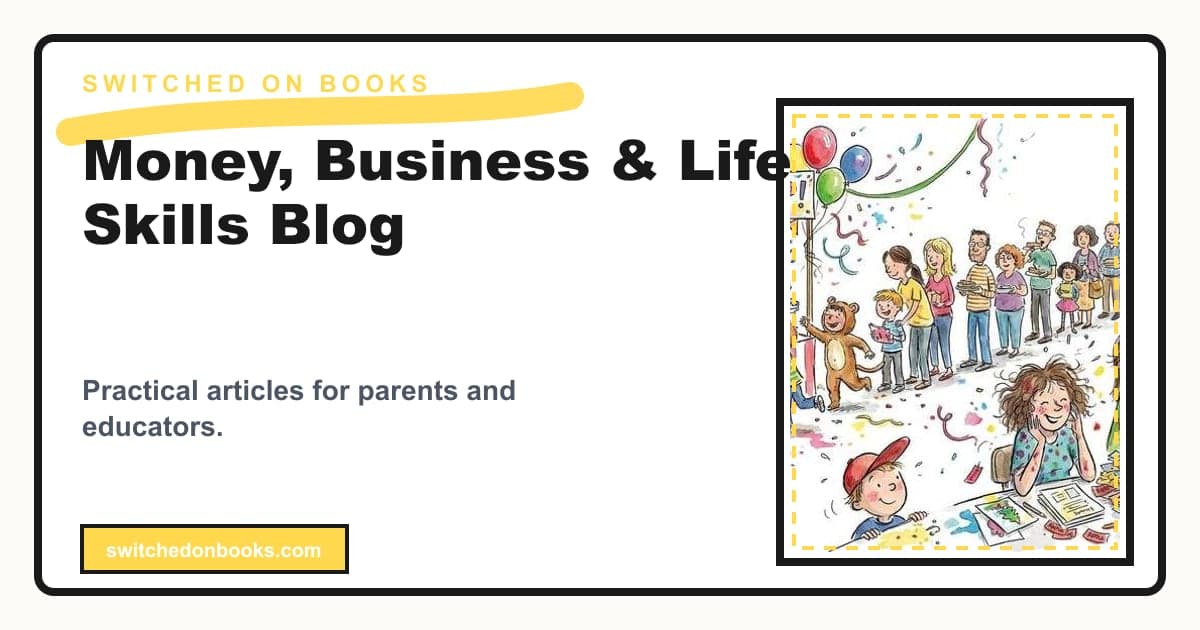
Most children's money books have the same problem: the lesson is louder than the story.
The parent can see the value. The child can see the trap. A character says something responsible, a neat little moral appears, and everyone pretends that was fun.
Kids are sharper than that. They know when a book is homework wearing a costume.
The best financial literacy books for kids do something different. They start with a real want. Sneakers. A game. Status. Freedom. A problem the child actually understands. Then the money lesson becomes part of the chase.
Story earns attention
A child will not care about margins because an adult says margins are important. They will care if a character thinks he is winning, then discovers his costs are eating the whole plan.
They will not care about value creation as a phrase. They will care if the only way to get what the character wants is to solve a problem for someone else.
That is the difference between instruction and story. Instruction asks for attention. Story earns it.
Money is really a thinking lesson
Good money books are not just about coins, cards, or saving jars. They are about pattern recognition.
Why do people pay for one thing and ignore another? Why does the same product sell better in a different place? Why does a discount feel good even when it makes you buy something you did not need? Why does everyone want the thing that looks scarce?
These are business questions, but children can understand them if the examples are close enough to their world.
That is the lane Switched On Books is built for. The book is not trying to turn childhood into a spreadsheet. It is trying to make the hidden rules visible.
Choose books that respect the reader
If you are looking for entrepreneurship books for kids, do not only ask whether the book teaches the right concept. Ask whether a child would keep reading if the lesson was removed.
If the answer is no, the lesson is probably doing too much work.
A strong story gives the child a reason to turn the page. The financial literacy is the second reward: the thing they realize they picked up after the fact.
That is how you make the lesson stick.
FAQ
What makes a good money book for kids?
A good money book earns attention with a real story, then lets the money lesson arrive through character decisions, mistakes, and consequences.
Should kids read financial literacy books?
Yes, if the book respects the reader. Story-led financial literacy gives children language for money without making the lesson feel forced.